
Invoice fraud exploits urgency, trusted relationships, and gaps between the people who order, approve, and pay. A message may impersonate a supplier and request new bank details. A fake vendor may submit convincing documents. An employee may alter a legitimate invoice or arrange duplicate payment. Growing businesses are attractive targets because transaction volume rises faster than formal controls.
Technology helps, but prevention depends on a layered process. No single email filter or approval limit can stop every attempt.
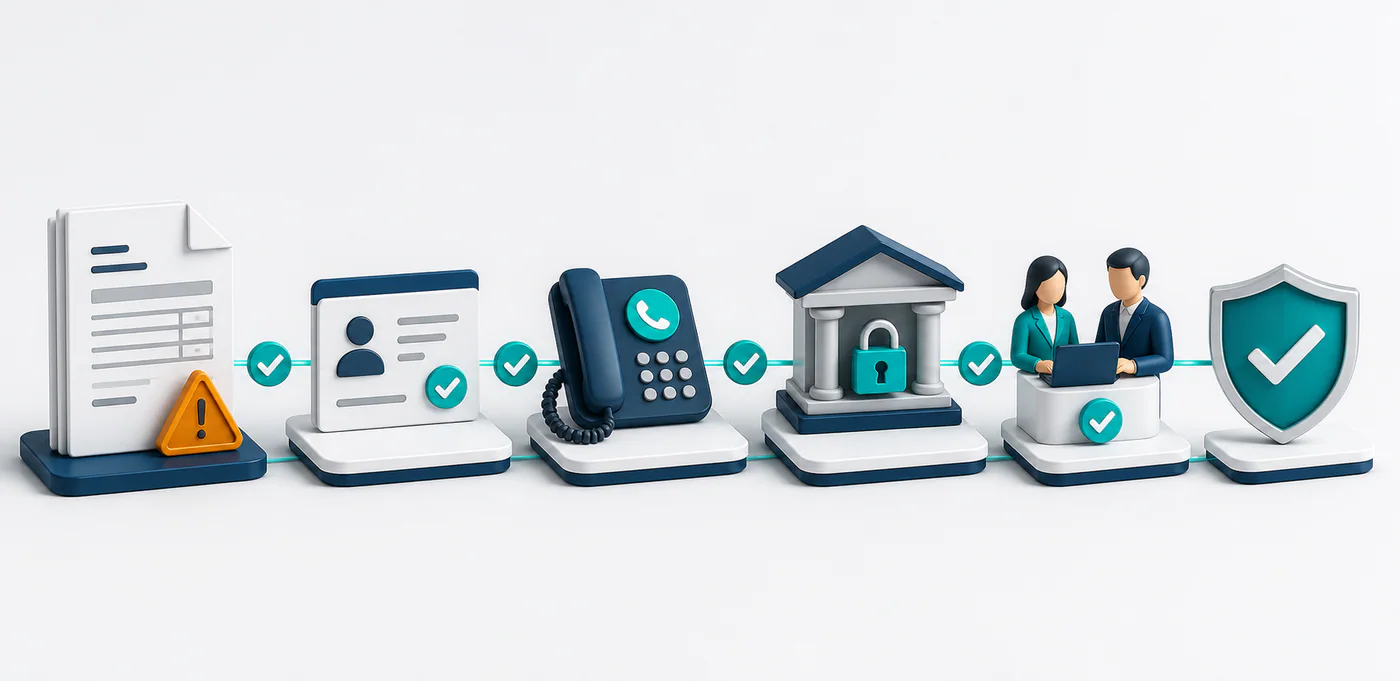
Separate key responsibilities
Whenever practical, different people should create vendors, approve purchases, confirm receipt, and release payments. Separation makes it harder for one compromised account or dishonest individual to control an entire transaction. A small team may not have four employees available, so add an owner review or external bookkeeper for higher-risk steps.
Design permissions around job needs. Staff who enter invoices should not automatically be able to change vendor bank details or approve their own entries. Review access when responsibilities change and remove dormant accounts promptly.
Verify new vendors independently
Collect a legal name, address, tax details, contact information, and payment instructions through an approved onboarding process. Confirm the relationship with the employee who requested the vendor. Where appropriate, verify company details using authoritative records or trusted business sources.
Do not rely only on contact information inside the submitted invoice. A fraudulent document can contain a fraudulent phone number. Use a known contact, an independently obtained number, or an existing contract to confirm unusual details.
Treat bank-detail changes as high risk
Payment diversion often begins with an email claiming that a supplier has changed banks. Require a second-person review and out-of-band verification with a known supplier contact. Record who confirmed the change, when, and through which channel. Consider a temporary payment hold or additional check for the first transaction to new details.
Attackers can imitate writing style or gain access to a real mailbox, so a familiar email thread is not sufficient proof. The verification step must use a separate trusted route.
Match invoices to business activity
Where suitable, compare the invoice with an approved purchase order and evidence that goods or services were received. Check supplier identity, quantity, price, tax, bank information, invoice number, and totals. Investigate vague descriptions, unexpected rounding, altered documents, and charges that do not match the agreement.
Not every business uses formal purchase orders, but every payment should have a clear business owner who can confirm what was purchased and whether it was delivered.
Detect duplicates and anomalies
Invoicing or accounting software can flag repeated invoice numbers, suppliers, dates, and amounts. Configure alerts for new bank accounts, unusual payment destinations, first-time vendors, payments just below an approval threshold, and sudden increases in frequency or value.
Automated alerts require human judgment. Define who reviews them and how quickly. If every minor exception creates a warning, employees may begin ignoring the system.
Use secure approvals
Keep approvals inside a controlled system rather than scattered across informal messages. Require multifactor authentication, unique user accounts, and an audit trail. Payment batches should show the final recipient account, not just the supplier name, before release.
For significant transactions, use dual authorization at the bank. Protect approval devices and never ask staff to share codes or passwords. Urgent executive requests should follow the same process as ordinary payments.
Reconcile and review regularly
Reconcile bank activity quickly so unexpected payments are identified while recovery may still be possible. Review vendor changes, canceled payments, credit notes, manual journal entries, and inactive suppliers. Compare actual spending with budgets and contracts to reveal charges that look valid individually but are unusual in context.
Build a reporting culture
Train staff to pause when an invoice uses a new address, creates unusual urgency, changes payment details, or asks them to bypass a control. Provide a clear internal route for reporting concerns without embarrassment. Simulated examples and short refreshers are more useful than a policy that nobody remembers.
If fraud is suspected, stop pending payments, preserve records, notify the bank or payment provider immediately, and follow legal, insurance, and incident-response guidance. Speed matters.
Effective prevention is deliberately repetitive: verify, approve, reconcile, and review. These steps may add minutes to a transaction, but they protect cash, supplier relationships, and confidence in the finance function.
Leave a Reply