
Getting paid faster rarely depends on sending more reminders alone. Delays often begin much earlier: missing purchase-order numbers, unclear scope, invoices sent to the wrong person, or no defined owner for follow-up. A reliable invoice workflow removes these obstacles before the due date arrives.
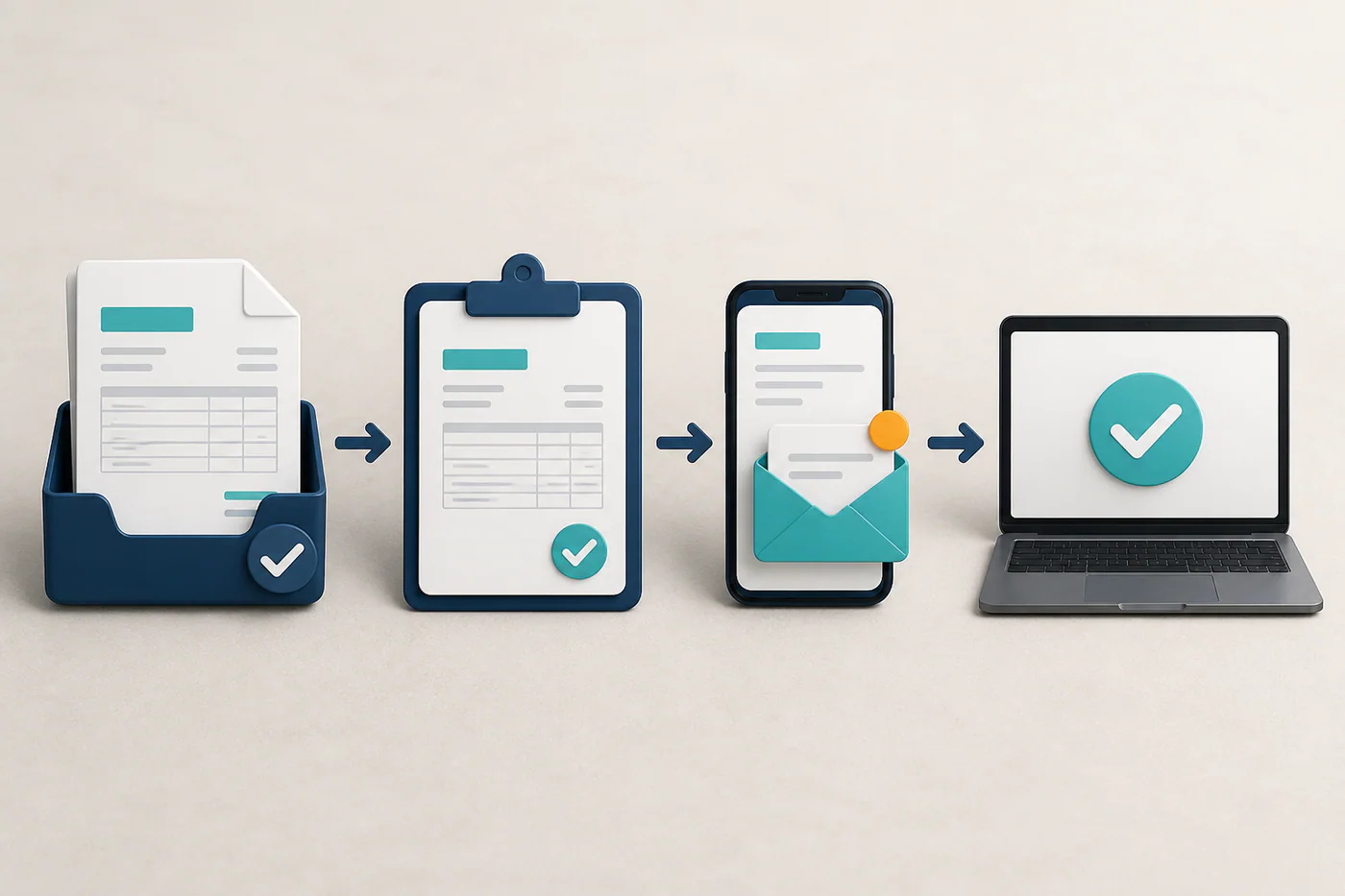
The goal is a repeatable path from completed work to confirmed payment. Every step should have an owner, a deadline, and a clear record. Here is a practical workflow that a small business can implement without creating a large finance department.
Confirm billing requirements during onboarding
Ask new customers how they process invoices before work begins. Record the legal business name, billing address, tax information, accounts-payable contact, preferred delivery method, and any purchase-order or vendor-portal requirements. Confirm who can approve the work and whether supporting documents, timesheets, or completion certificates are needed.
This small onboarding step prevents the common situation in which a completed invoice sits unprocessed because it does not match the customer’s internal rules.
Agree on scope, price, and terms in writing
An invoice should confirm an existing agreement, not introduce new information. State the price, payment schedule, accepted methods, deposit requirements, expenses, and due date in the proposal or contract. If late fees or early-payment discounts apply, explain them before the customer accepts the work.
Use specific language. “Due within 15 calendar days of the invoice date” is clearer than “payment expected promptly.” Make sure the terms are commercially reasonable and compliant with local rules.
Trigger invoicing immediately
Define the event that starts billing: a signed agreement, delivery, milestone approval, month-end, or logged usage. Connect that event to a task or automation so the invoice is not delayed while someone waits for an email. For recurring services, prepare invoices on a consistent schedule and review exceptions before they are sent.
Speed matters because every internal delay adds to the time your cash remains unavailable. If you wait a week to invoice, even a customer who pays exactly on time effectively receives an extra week of credit.
Make every invoice easy to approve
Use a recognizable business name and a clear subject line. Include a unique invoice number, issue date, due date, customer details, concise description of the work, amount, tax, total due, and payment instructions. Add the contract, project, or purchase-order reference the customer expects.
Avoid vague line items such as “services rendered.” A short but specific description helps the approver match the charge to delivered value. Check totals and attachments before sending; a corrected invoice can restart the customer’s approval clock.
Deliver it to the right channel
Send the invoice to the accounts-payable destination and copy the operational contact when appropriate. Some customers accept email, while others require a portal upload. Treat successful delivery as a recorded step. If your system shows a bounce or failed upload, resolve it the same day.
Use a polite reminder sequence
A balanced sequence might include confirmation when the invoice is sent, a reminder several days before the due date, a notice on the due date, and increasingly personal follow-up after it becomes overdue. Automated messages work well for routine stages, but a phone call or direct note is better when a balance is disputed or materially late.
Keep the tone factual. Reference the invoice number, amount, due date, and payment link, then ask whether anything is blocking approval. The objective is to identify the next action, not simply repeat that money is owed.
Reconcile payments and close the loop
Record payments promptly and match them to the correct invoice. Send a receipt when useful, stop reminders immediately, and investigate short payments or bank-fee deductions. Track reasons for delay—missing documents, billing errors, customer cash problems, or internal follow-up gaps.
Review the workflow monthly using measures such as average days to pay, overdue percentage, and disputed invoices. The fastest path to better cash flow is often fixing the recurring cause of delay. A disciplined workflow makes payment convenient for the customer and gives your team an early warning when something goes wrong.
Leave a Reply